Night Watch
Pia Paulina Guilmoth's Nocturnal Photographs

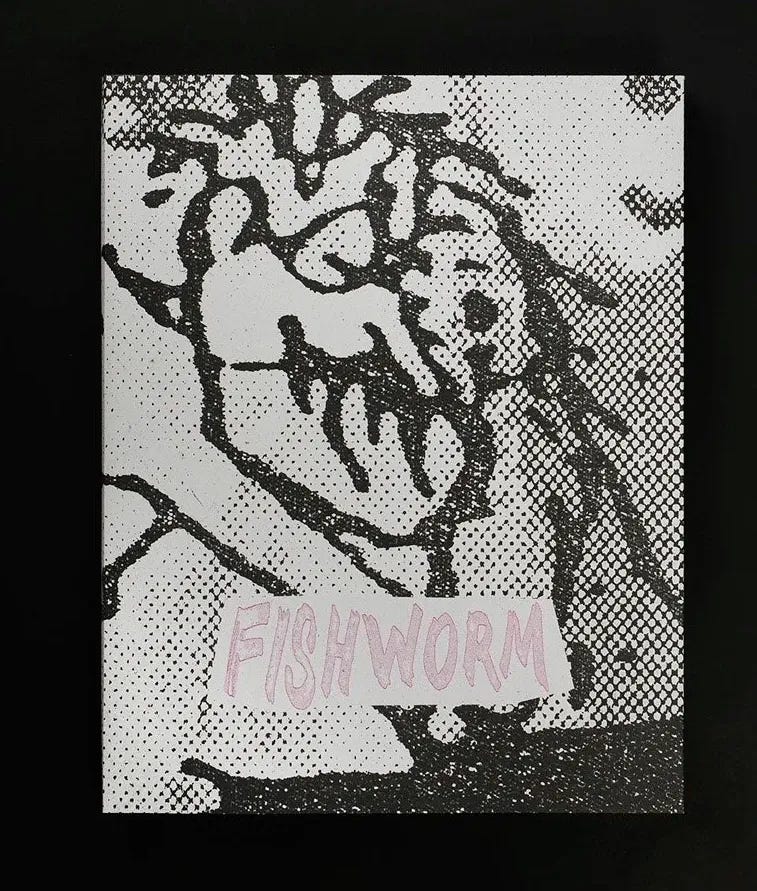
I’m a little late to the party of people who’ve fallen for the haunting photographs of Pia Paulina Guilmoth, but I’m glad to have arrived. Her book Flowers Drink the River (Stanley/Barker) received a Jurors’ Special Mention from the Aperture PhotoBook Awards in 2025, and her 2021 book At Night Gardens Grow is being re-issued this June by Stanley/Barker, with a new edit. Fishworm by Guilmoth and her partner Jesse Bull Saffire, was published by Void last year, and work from the series is on view at These Days in Los Angeles through June 6. Yet somehow I only really became aware of her quiet, otherworldly photographs at AIPAD’s Photography Show in April, at CLAMP’s booth.
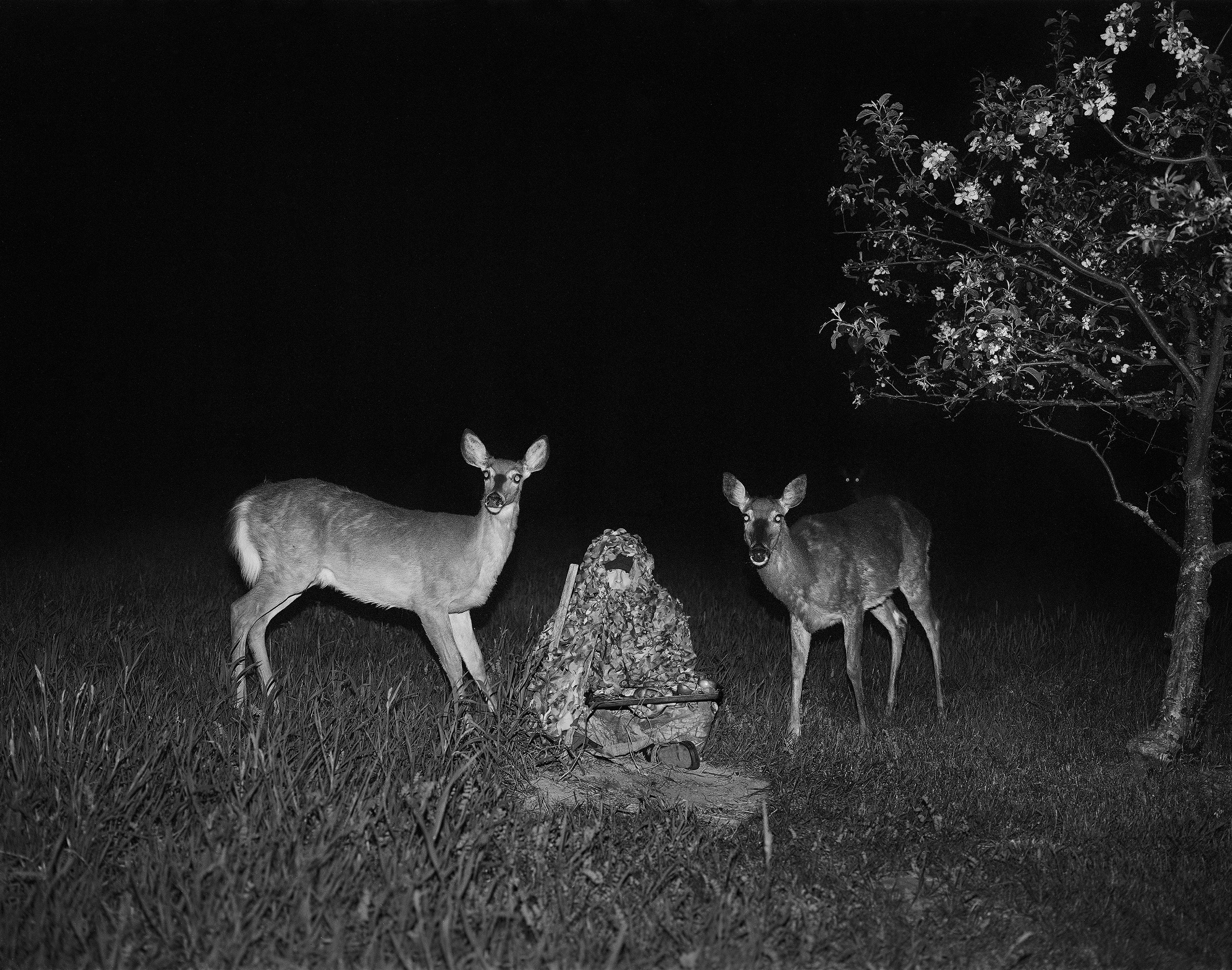
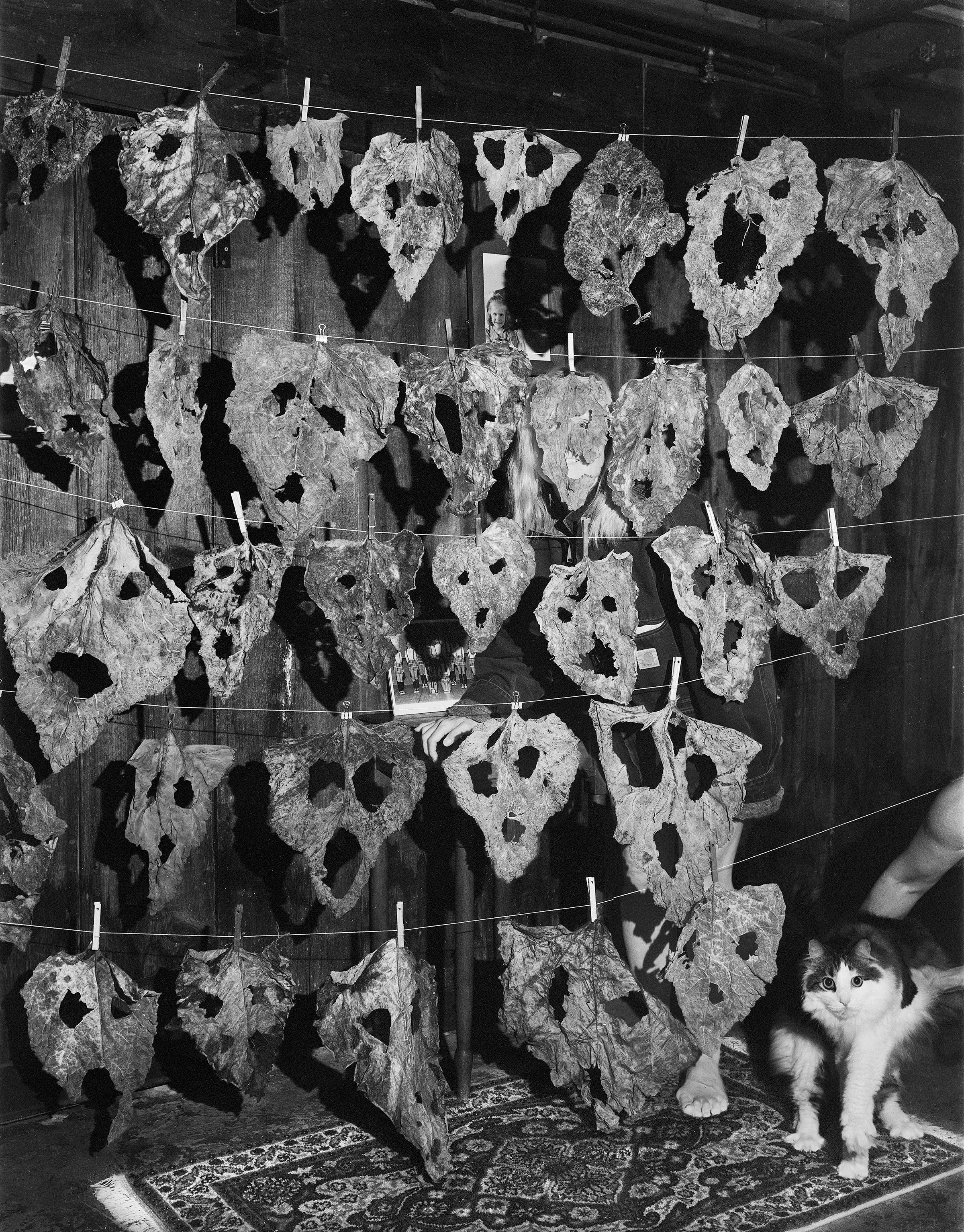
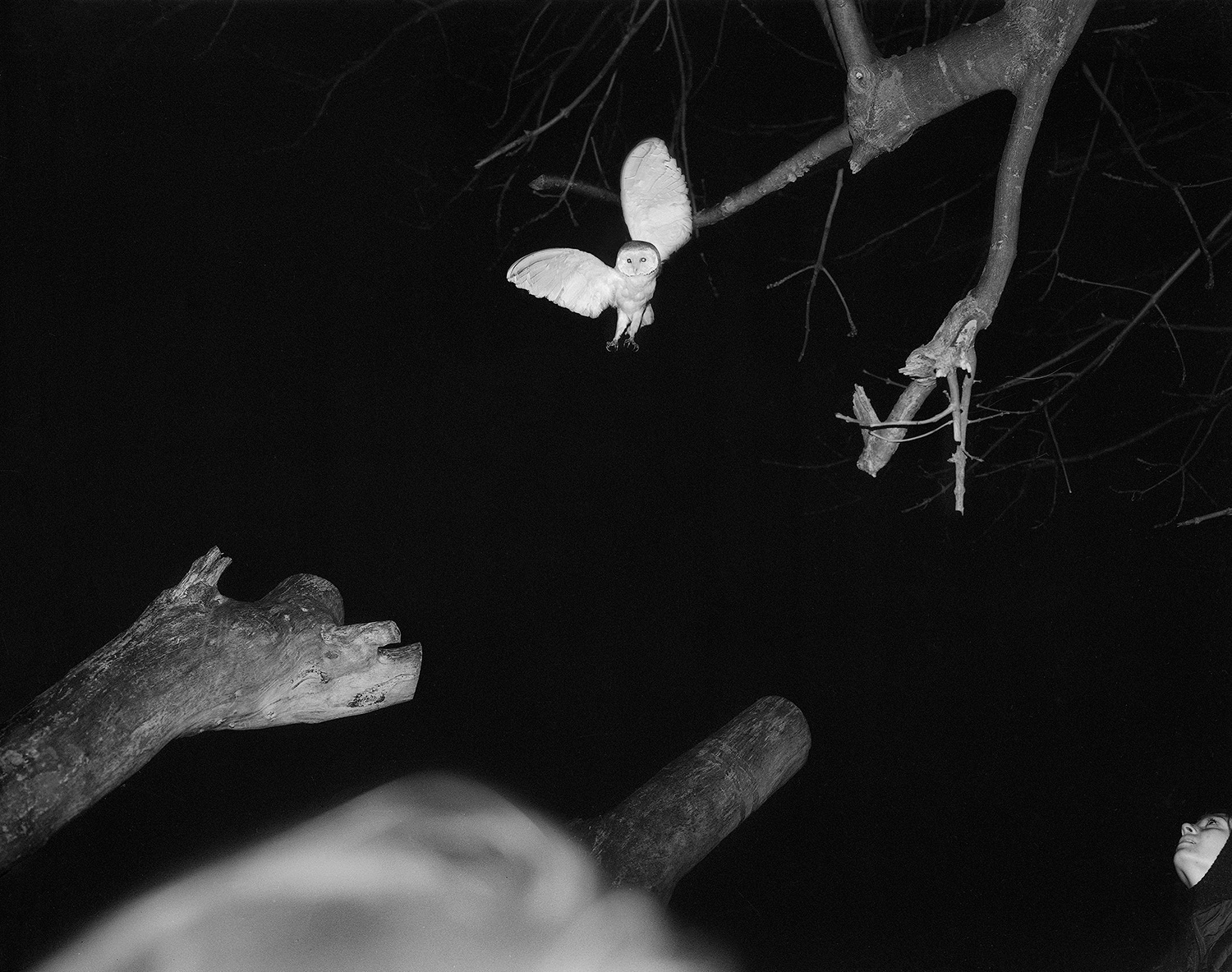
Guilmoth’s nocturnal black-and-white photographs are rooted in the natural world – specifically, the woods, ponds, and fields near her home in rural Maine that serve as the setting for atmospheric images of her friends (covered in mud, paddling in a canoe at night, or pissing from a tree branch), woodland creatures (deer, heron), spider webs, the night sky. Some images, like Rhubarb Mother, have an uncanny, Roger Ballen quality. Five rows of large dried rhubarb leaves, roughly cut to look like masks, are clipped to lines like laundry. Guilmoth’s mother is just visible behind the rows of leaves, and an unknown someone in the lower right corner holds a bewildered cat. A couple of photographs can be glimpsed on the wall behind the leaves, including one of a young girl. It’s an enigmatic, vaguely unsettling image. The photograph was included in her series Flowers Drink the River, taken over the course of the first two years of her gender transition, a period that saw her increasingly comfortable and at ease in her own body and increasingly at risk in her small, right-wing town. A lot can be inferred from a photograph of thirty-some masks, all of them fragile, some of them disintegrating before our eyes.
Guilmoth has revisited her first book, At Night Gardens Grow, which sold out quickly after it was published in 2021. The original book was made before she medically transitioned, during a deeply unhappy period, and for the new version, she’s added a handful of new images and removed a few photographs that, she says, she no longer relates. Her gender transition is generally part of the atmosphere of her photographs, but occasionally she addresses it more directly, as in Mom the Night I Told Her I Was a Girl. Guilmoth’s mother, wearing a long-sleeved patterned dress, holds a fragile spiderweb uncertainly, away from her body. A double exposure captures her unsmiling face twice.
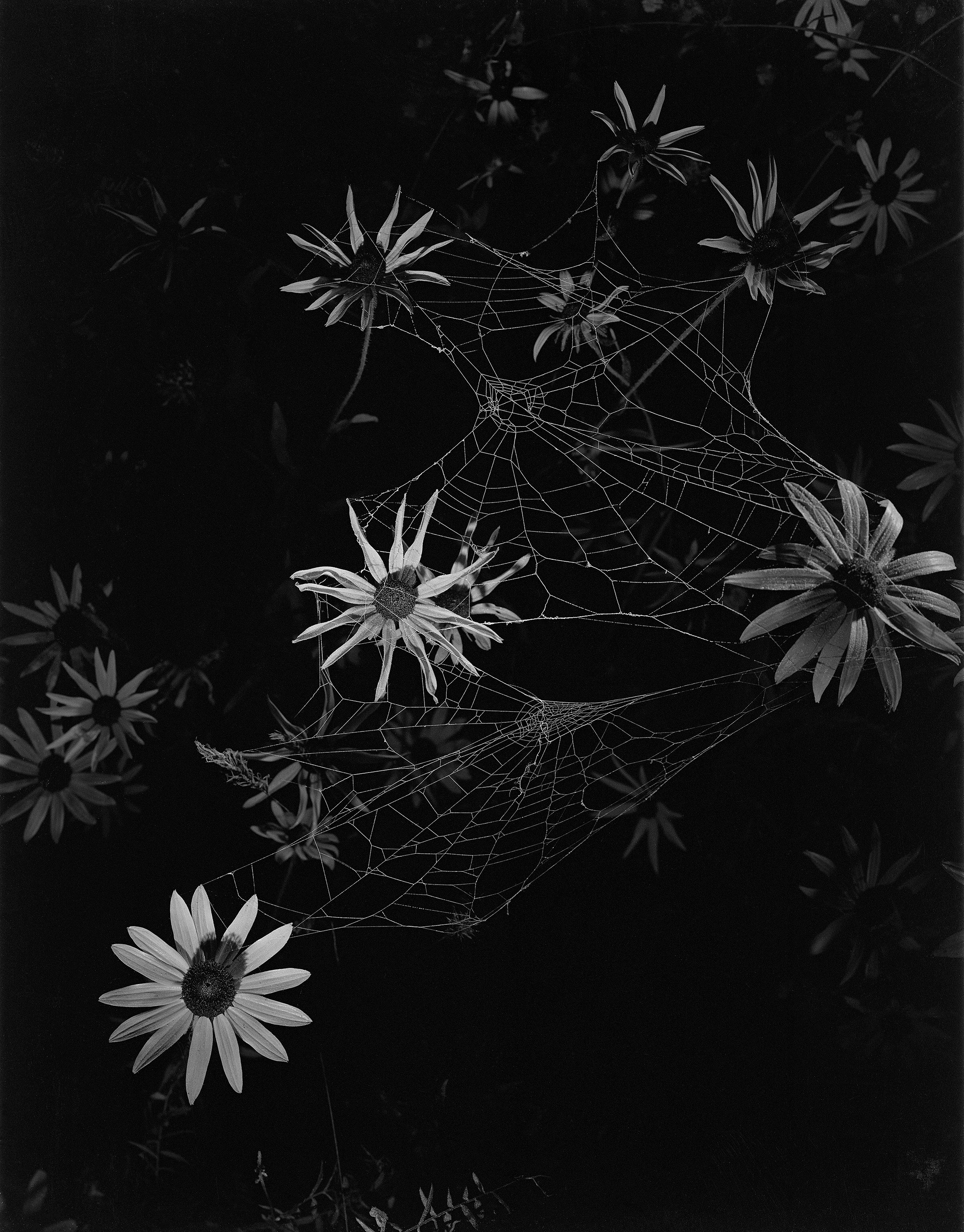
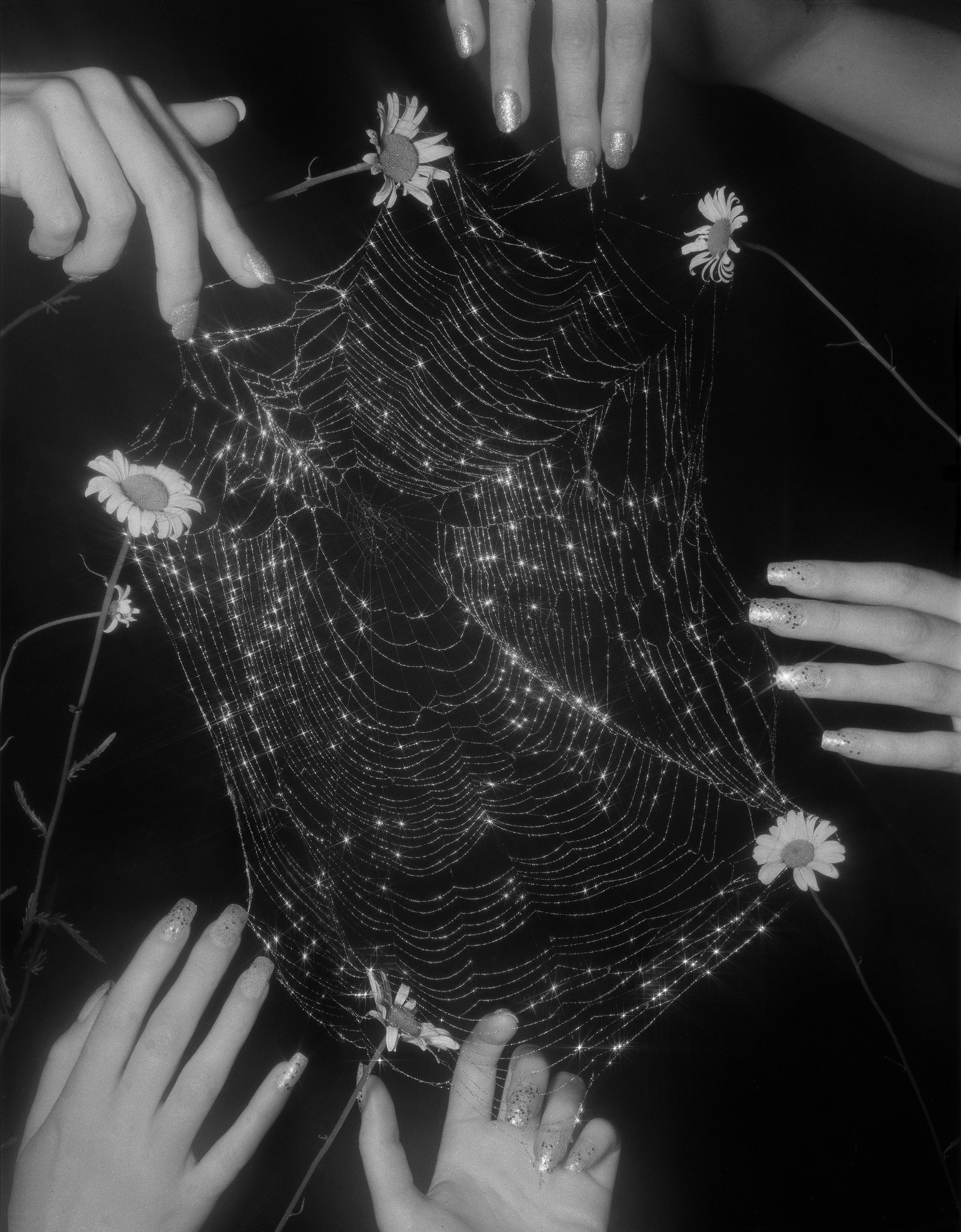
Spiderwebs, delicate and astonishing in their geometry and detail, are a recurring feature of Guilmoth’s work, often photographed against a dark sky, frequently removed from their original setting and placed in constructions conceived by the photographer, who waits to see what a breeze or a ripple or a passing insect might do to reshape it. In their interventionist spirit, they remind me of Nina Katchadourian’s Mended Spiderwebs series. In one image, Guilmoth has draped a spiderweb over a cluster of black-eyed susans; in another, a spiderweb is stretched out, its edges held by several hands, all with long painted fingernails; it’s been sprinkled with mica powder, so the strands sparkle. In another photograph, Guilmoth has coated a spiderweb in baking powder and placed it on the surface of a pond – its deformed configuration brings to mind a misshapen galaxy or interstellar formation. “My whole life has been walking through the woods at night and having their silk brush against my face,” says Guilmoth, of spiderwebs. “It’s a perfect and mesmerizing form.” She uses a large-format, 4x5 camera, which allows her to capture small details, but which also forces her to move slowly and with intention, the opposite, in a way, of Cartier-Bresson’s decisive moment. She’s not capturing an instant, she’s waiting, with patience, for something to unfold in front of her lens.
Or, in the case of her new book, Fishworm, she’s paying close attention to the photographic treasures that can be found in the trash — yard sales, flea markets, garbage cans, and abandoned houses. Guilmoth and her partner, Jesse Bull Saffire, spent seven years scavenging within a six-mile radius of their home in Maine, discovering negatives in an abandoned school; pornographic imagery in the shed of a state politician (who allowed them to comb through the collection); old newspapers; family photographs (including some from Guilmoth’s archive of her own family photographs); and a dozen or so images that the pair took themselves. They scanned all of the images on an old Xerox machine that they found abandoned, sitting in the rain, outside of the town’s fire department on “heavy dump day,” as the handwritten first page of the book tells us. I’m not sure I could describe this project better than they do: “A jumbled chopped ‘n’ screwed history of the old mill towns in the Sandy River Valley…”
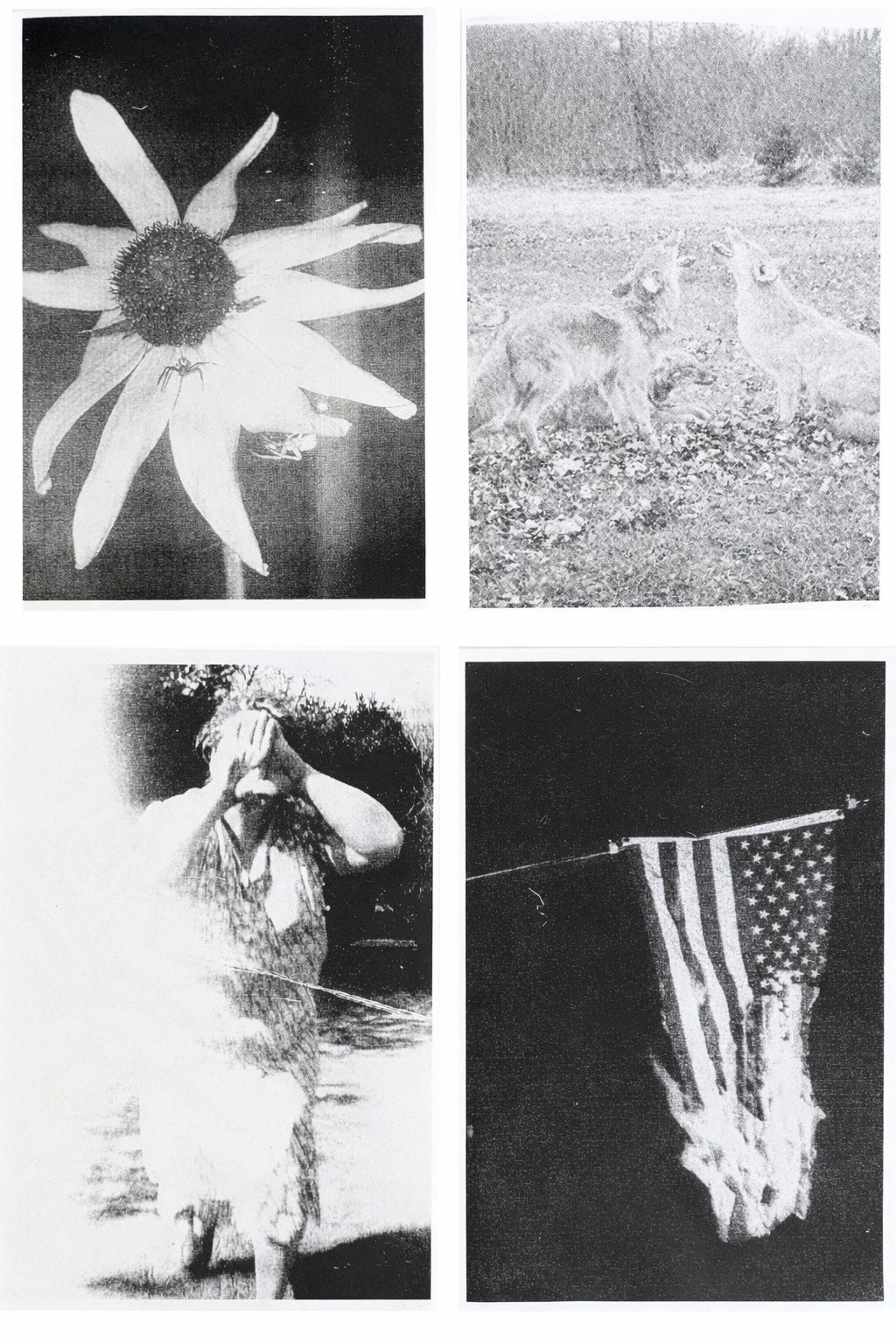
Guilmoth was part of the zine culture as an undergraduate at the Maine College of Art and Design, and there’s a kind of punk aesthetic to Fishwork, unlike the quiet intentionality and formal accomplishment of Flowers Drink the River or At Night Gardens Grow. The images, which run into each other with almost no white space around them, add up to an irreverent alternate history of small-town America, told in images that nobody intended to preserve. “Fishworm is kind of anti narrative, at least in its intentions,” says Guilmoth, “but it’s also filled with endless narratives.” There’s a birth, a baptism, an x-ray, fires, a cow stuck in a tree (trapped there by a flood that receded), Halloween costumes, a burning American flag, taxidermied deer, someone smoking a bong, and people having sex. There are clouds, a cat on a Ski-doo, the crushed remains of a car whose license plate reads, improbably, “Magyk.” The book reflects the hopes and aspirations, the unexpected violence and predictable disasters, the makeshift nature of things in many small towns, not to mention the incidental moments of beauty, the undercurrents of eroticism. Guilmoth and Saffire haven’t added any text, aside from the scrawled and partially scratched-out description on the first page, leaving viewers to make connections and build narratives as they may. It’s all peculiar; it’s all familiar.
Looking, Listening, Reading, and More: Recommended Reading
I devoured two of Patrick Radden Keefe’s previous books, Empire of Pain: The Secret History of the Sackler Dynasty, and Say Nothing: A True Story of Murder and Memory in Northern Ireland, not to mention his wild podcast, Wind of Change (about a song by the heavy-metal German band the Scorpions that might have been written by the CIA…?), so I was eagerly anticipating London Falling: A Mysterious Death in a Gilded City and a Family’s Search for Truth. Radden Keefe investigates the story of an upper-middle-class teenage boy who falls – or is pushed – to his death from a London balcony. The young man, Zac Brettler, had become obsessed with money and the trappings of luxury, and he’d fabricated a fake identity as the wealthy son of a Russian oligarch. He wound up becoming involved with some unsavory and possibly violent characters who were taken in by his lies – at least initially. It’s a sympathetic portrayal of Brettler’s heartbroken and mystified parents as well as a deeply reported story about London itself, and the way wealth and greed have reshaped the city.
Thanks for introducing these pictures and photographer.... Great pics, great read.
Great stuff as always Jean! "It's all peculiar. It's all familiar."...